You’re looking to maximize your FPV drone’s transmission range, but you’re not sure which VTX will deliver the performance you need. Power output, frequency band, and heat management all play critical roles in your setup’s success. The right transmitter can dramatically improve your flying experience, but choosing incorrectly can leave you frustrated and grounded. Let’s explore what separates the top performers from the rest.
Quick Overview
- High power output (600mW-2W) maximizes transmission range for long-distance FPV flying and racing applications.
- 5.8GHz frequency band with multiple channels (37+) enables reliable signal transmission and regulatory compliance.
- Advanced heat management systems with double-sided heatsinks prevent thermal throttling during extended high-power operation.
- Low latency transmission (22ms) ensures responsive control and real-time video feedback for competitive FPV racing.
- Quality antenna compatibility with SMA connectors and directional designs extends range while minimizing signal dead zones.
| AKK FX2-Ultimate 5.8GHz FPV Transmitter |

| Best For Customization | Frequency Band: 5.8GHz | Maximum Power Output: 600mW | Channel Count: 37CH | VIEW LATEST PRICE | Read Our Analysis |
| CADDXFPV Walksnail Avatar GT Kit FPV Drone System |

| Best Digital System | Frequency Band: Digital HD (proprietary) | Maximum Power Output: 2000mW (2W) | Channel Count: N/A (Digital system) | VIEW LATEST PRICE | Read Our Analysis |
| AKK KC04 5.8G FPV Transmitter Racing Quadcopter |
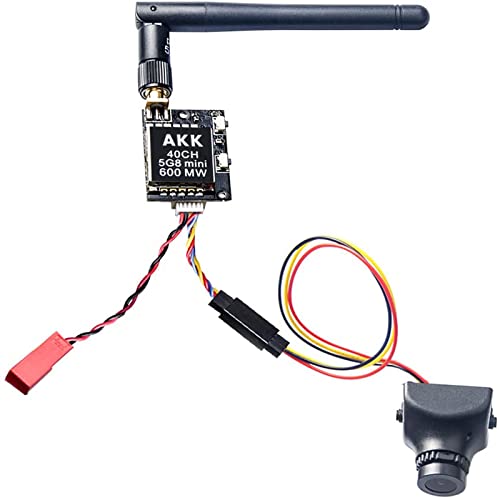
| Best For Beginners | Frequency Band: 5.8GHz | Maximum Power Output: 600mW | Channel Count: Multiple channels (unspecified count) | VIEW LATEST PRICE | Read Our Analysis |
| SoloGood 5.8GHz 2W FPV Video Transmitter |

| Longest Range | Frequency Band: 5.8GHz | Maximum Power Output: 2000mW (2W) | Channel Count: 8CH | VIEW LATEST PRICE | Read Our Analysis |
| AKK BA3 5.8G 40CH VTX FPV Camera |

| Best Compact Option | Frequency Band: 5.8GHz | Maximum Power Output: 200mW | Channel Count: 40CH | VIEW LATEST PRICE | Read Our Analysis |
| SoloGood Rush Tank FPV 5.8GHz Video Transmitter |

| Best Mini VTX | Frequency Band: 5.8GHz | Maximum Power Output: 800mW | Channel Count: 48CH | VIEW LATEST PRICE | Read Our Analysis |
| SoloGood Rush Tank III 5.8G FPV Video Transmitter |
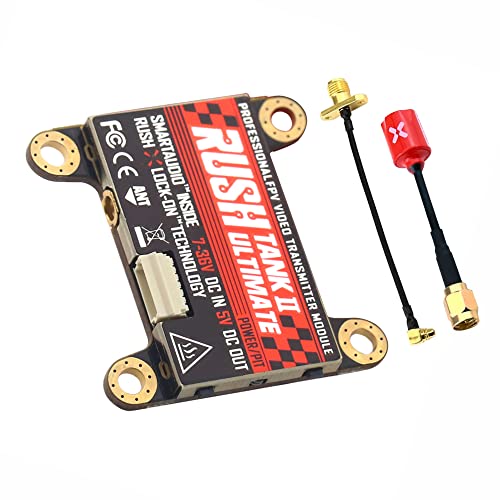
| Best All-Around Performance | Frequency Band: 5.8GHz | Maximum Power Output: 800mW | Channel Count: Multiple channels (unspecified count) | VIEW LATEST PRICE | Read Our Analysis |
More Details on Our Top Picks
AKK FX2-Ultimate 5.8GHz FPV Transmitter
If you’re looking for a VTX that combines versatility with user-friendly configuration, the AKK FX2-Ultimate delivers. This 5.8GHz transmitter offers 37 channels and switchable power levels—25mW, 200mW, and 600mW—so you’ll adapt to any flying situation. You’ll appreciate the Smart Audio integration and OSD configuration through Betaflight, which streamlines setup without extra hassle. The unit accepts 7-26V input and provides 5V output for your camera, featuring filtered power for cleaner signals. With solder pad connectors and one-button frequency/power adjustments, you’re getting a long-range FPV solution that doesn’t sacrifice accessibility for advanced pilots.
- Frequency Band:5.8GHz
- Maximum Power Output:600mW
- Channel Count:37CH
- Weight/Size:Compact mini design
- Antenna Type:Solder pads connector
- Switchable Power Modes:Yes (25mW/200mW/600mW)
- Additional Feature:Smart Audio VTX integration
- Additional Feature:OSD configurable via Betaflight
- Additional Feature:5V camera power output
CADDXFPV Walksnail Avatar GT Kit FPV Drone System
The CADDXFPV Walksnail Avatar GT Kit stands out as the best VTX for pilots who prioritize crystal-clear live feeds and extended range. You’ll experience ultra-low 22ms latency and stable transmission up to 6km with dual antennas outputting 2W. The 1080P/100fps live view and 160° FOV deliver stunning visual clarity, while you can record 1080P or 720P footage directly to a microSD card supporting up to 256GB. Its durable metal shell with integrated heatsink guarantees reliability, and it’s compatible with 20×20mm and 25.5×25.5mm frames. You’ll integrate seamlessly with Walksnail Avatar Goggles X and L, though note it’s incompatible with GM3 gimbals.
- Frequency Band:Digital HD (proprietary)
- Maximum Power Output:2000mW (2W)
- Channel Count:N/A (Digital system)
- Weight/Size:Lightweight with integrated heatsink
- Antenna Type:Dual antennas
- Switchable Power Modes:Fixed 2W output
- Additional Feature:22ms ultra-low latency
- Additional Feature:6km stable signal range
- Additional Feature:Built-in microSD recording slot
AKK KC04 5.8G FPV Transmitter Racing Quadcopter
Looking for an entry-level FPV system that won’t weigh down your quadcopter? The AKK KC04 5.8G FPV Transmitter delivers exactly what you need. This compact, lightweight VTX pairs with a 700TVL 2.8mm camera offering a 120-degree field of view, giving you solid visual feedback for racing and freestyle flying. You’ll appreciate the 600mW power output, which provides reliable signal range for beginners. The dual push buttons let you easily switch channels and frequencies on the fly. Running on NTSC signal system, it’s straightforward to set up and operate. If you’re just starting your FPV journey, this RTF system offers dependable performance without unnecessary complexity or expense.
- Frequency Band:5.8GHz
- Maximum Power Output:600mW
- Channel Count:Multiple channels (unspecified count)
- Weight/Size:Small and lightweight
- Antenna Type:Integrated (not specified)
- Switchable Power Modes:Fixed 600mW
- Additional Feature:700TVL integrated FPV camera
- Additional Feature:Beginner-friendly RTF system
- Additional Feature:Double push-button controls
SoloGood 5.8GHz 2W FPV Video Transmitter
You’ll want the SoloGood 5.8GHz 2W VTX if you’re pushing your FPV racing drone to its limits, since its 2000MW power output delivers an impressive over 20km range—far exceeding what most lightweight transmitters offer. The double-sided heat sink keeps temperatures managed during extended flights, while the upgraded synchronous rectifier DCDC power supply guarantees stable performance. Its reinforced SMA interface withstands the rigors of aggressive racing. You’ll also appreciate the improved image quality and durable silicone wiring. Compatible with racing drones and quadcopters alike, this transmitter gives you the range advantage you need when competition heats up.
- Frequency Band:5.8GHz
- Maximum Power Output:2000mW (2W)
- Channel Count:8CH
- Weight/Size:Lightweight
- Antenna Type:5dbi SMA antenna
- Switchable Power Modes:Fixed 2W output
- Additional Feature:20km+ extreme range capability
- Additional Feature:Double-sided heat sink design
- Additional Feature:Synchronous rectifier DCDC upgrade
AKK BA3 5.8G 40CH VTX FPV Camera
If you’re piloting tiny whoop drones or other ultra-micro aircraft, the AKK BA3 stands out as an exceptional all-in-one solution that combines a 600TVL camera, 40-channel transmitter, and brass dipole antenna in just 4.7 grams. You’ll appreciate its switchable power levels—0, 25mW, 50mW, and 200mW—letting you optimize range and battery life. The upgraded low-light performance guarantees you’re capturing quality footage indoors and outdoors. Since it runs on a single 1S LiPo battery, you’re maximizing your payload capacity. With 40 channels across the 5.8GHz frequency band, you’ll find plenty of interference-free options. The AKK BA3 delivers impressive performance without compromising your aircraft’s agility.
- Frequency Band:5.8GHz
- Maximum Power Output:200mW
- Channel Count:40CH
- Weight/Size:4.7g ultra-compact
- Antenna Type:Brass dipole antenna
- Switchable Power Modes:Yes (0/25mW/50mW/200mW)
- Additional Feature:All-in-one camera/transmitter combo
- Additional Feature:Ultra-compact 4.7g weight
- Additional Feature:Low-light performance enhanced
SoloGood Rush Tank FPV 5.8GHz Video Transmitter
Competitive FPV racers who need to field multiple drones simultaneously will appreciate the Rush Tank’s ability to support 8 racing drones on the same band without interference. You’ll get exceptional stability from its new power filter system, ensuring reliable transmission even under demanding conditions. The compact 20x20mm design weighs just 4.46g, making it ideal for lightweight racing builds. You can switch between PIT, 25, 200, 500, and 800mW modes depending on your range needs. Installation’s straightforward, and you’ll appreciate the side LED indicator that gives you intuitive status feedback. The included RUSH Cherry antenna with MMCX connector rounds out this well-engineered transmitter for serious racers.
- Frequency Band:5.8GHz
- Maximum Power Output:800mW
- Channel Count:48CH
- Weight/Size:4.46g (20x20mm)
- Antenna Type:MMCX connector (includes RUSH Cherry antenna)
- Switchable Power Modes:Yes (25/200/500/800mW)
- Additional Feature:LED status indicator light
- Additional Feature:Pit mode close-range capability
- Additional Feature:20x20mm ultra-compact size
SoloGood Rush Tank III 5.8G FPV Video Transmitter
The SoloGood Rush Tank III stands out as an excellent choice for pilots who demand compact power and reliability in their FPV setups. This 30x30mm transmitter delivers switchable power modes ranging from 25mW to 800mW, letting you balance range with battery life based on your flying conditions. You’ll appreciate the fully covered metal casing that shields against interference while the LOCK-ON technology guarantees stable transmission. The included Foxeer Micro Lollipop antenna provides immediate out-of-box performance. With high input voltage tolerance, advanced power filtering, and robust anti-interference capabilities, the Rush Tank III handles demanding environments without compromise. It’s engineered for pilots seeking dependable, compact VTX performance.
- Frequency Band:5.8GHz
- Maximum Power Output:800mW
- Channel Count:Multiple channels (unspecified count)
- Weight/Size:Compact (30x30mm)
- Antenna Type:SMA connector (includes Foxeer Lollipop antenna)
- Switchable Power Modes:Yes (25/200/500/800mW)
- Additional Feature:LOCK-ON technology anti-interference
- Additional Feature:High input voltage range
- Additional Feature:Fully covered metal casing
Factors to Consider When Choosing a VTX for Drones
When you’re selecting a VTX for your drone, you’ll need to evaluate several critical factors that directly impact your flying experience. Power output, frequency band compatibility, physical dimensions, transmission range, and cooling capabilities all play essential roles in determining whether a VTX meets your specific needs. Understanding how each of these elements works together helps you make an informed choice that balances performance with your drone’s limitations.
Power Output Requirements
One of the most critical decisions you’ll make when selecting a VTX is determining the right power output for your needs. You’ll want to balance range and signal quality against power consumption and heat generation.
For indoor flying or close-range operations, you’ll find that 25-200mW VTXs work perfectly for small drones. However, if you’re flying larger outdoor racing drones, you’ll need 500-800mW for adequate range and signal strength.
Consider your specific flying environment, obstacles present, and desired range when making this choice. Fortunately, many modern VTXs offer switchable power levels, giving you flexibility to adjust output based on your current conditions. This adaptability lets you optimize performance without committing to a fixed power setting.
Frequency Band Selection
After you’ve determined your ideal power output, you’ll need to select the right frequency band for your VTX—a decision that’s just as important as wattage. You’ll encounter three primary bands: 5.8GHz, which dominates FPV racing due to its range and penetration; 2.4GHz, which offers better obstacle navigation but shorter distance; and 1.3GHz, preferred for long-range flying because signals travel further with less attenuation.
Your choice depends on your flying environment and goals. Racing pilots typically stick with 5.8GHz for competitive consistency. Freestyle flyers often prefer 5.8GHz’s responsiveness. Long-range enthusiasts gravitate toward 1.3GHz despite fewer available channels.
Consider your receiver compatibility too—ensure your goggles or ground station support your chosen band. Regional regulations also matter; some countries restrict certain frequencies, so verify local rules before purchasing.
Size and Weight
Your VTX’s physical dimensions and mass directly impact your drone’s flight performance and handling characteristics. Heavier transmitters reduce flight time and agility, forcing you to compromise on battery capacity or payload options. Compact VTXs integrate seamlessly into tight frame designs, preserving your drone’s responsiveness and maneuverability.
You’ll find that lighter models, typically weighing 5-15 grams, suit racing and acrobatic flying. Standard VTXs around 20-30 grams work well for general FPV use. Bulkier units exceeding 40 grams suit larger platforms with greater payload capacity.
Consider your frame’s weight limits and mounting options carefully. You’ll want a VTX that fits your specific airframe without forcing structural compromises. Balance transmission power output against physical constraints—you don’t need maximum power if your drone can’t carry it effectively.
Range and Transmission Quality
Because transmission range and video quality directly determine how far you can fly and what you’ll see on your display, they’re critical factors in selecting a VTX. You’ll want higher output power and superior antenna designs to maximize your range, but that’s only part of the equation.
Video quality depends on bitrate, latency, and interference rejection working together. You need low latency for responsive FPV flying—even slight delays compromise control. Match your bitrate to your application and display capabilities for ideal performance.
Interference from competing RF sources, physical obstacles, and distance all degrade transmission quality. Choose a VTX with robust interference mitigation to maintain stable, clear video feeds in challenging environments.
Heat Management Systems
High-power video transmitters generate substantial heat that can degrade components, compromise signal quality, and shorten device lifespan. You’ll want to prioritize VTX models featuring robust heat management systems to maintain ideal operating temperatures.
Look for transmitters equipped with quality heat sinks and thermal pads that effectively dissipate excess heat. Airflow design matters greatly—guarantee your chosen VTX allows adequate ventilation within your drone’s frame.
For high-power applications, consider models with active cooling solutions like integrated fans. These enhance thermal regulation and prevent performance degradation during extended flights.
You should conduct thermal analysis of your specific setup, as power output and transmitter size directly influence cooling requirements. Proper heat management confirms reliable, consistent performance in demanding FPV operations and safeguards your investment long-term.
Channel Availability
Why does channel selection matter so much for your FPV experience? You’ll want a VTX that supports multiple frequency bands and channels to avoid interference with other pilots and comply with regional regulations.
Different countries enforce specific frequency restrictions. The US allows 5.8GHz, while some European regions limit you to 5.65GHz. You’ll find VTX models offering band switches that let you toggle between these frequencies harmoniously.
Channel variety gives you flexibility during flights. When you’re racing with other pilots or flying in populated areas, you can quickly switch to an open channel without dropping your video feed. Look for VTX units offering at least 16 channels across multiple bands. This guarantees you’ll always find a clean frequency for superior signal quality and range.
Antenna Compatibility
Once you’ve selected a VTX with the right channels and bands, you’ll need to guarantee it’s compatible with quality antennas that match your flying style. Most VTXs use standard connectors like SMA or RP-SMA, but you’ll want to verify this before purchasing. Directional antennas work best for long-range flying, while omnidirectional options suit racing and freestyle. Impedance matching matters too—ensure your antenna’s impedance aligns with your VTX’s specifications to avoid signal loss. Quality antennas minimize reflections and dead zones, dramatically improving your video feed’s reliability. Don’t skimp on this component; a premium antenna paired with your VTX makes the difference between consistent range and frustrating dropouts.
Budget and Value
Finding the right balance between cost and performance is essential when selecting a VTX for your drone setup. You don’t need to break the bank to get reliable video transmission—budget-friendly options deliver solid performance at lower price points. When evaluating value, consider the complete package: power output, channel flexibility, durability, and extra features that align with your flying style.
Calculate your total investment by factoring in antennas, wiring, and installation costs alongside the VTX unit itself. Determine your flying environment and range requirements first—this establishes your minimum power output needs. Finally, research user reviews and compare specifications across models to identify the best performance-to-price ratio that fits your needs and budget constraints.