Imagine you’ve invested in premium drone components, only to uncover your frame can’t handle the performance you’re expecting. You’re not alone in this frustration. The right carbon fiber frame transforms your entire flying experience, but with so many options available, you’ll want to know which models truly deliver. We’ve tested the top contenders to show you exactly what works.
Quick Overview
- Aerospace-grade carbon fiber with 3K or 12K weaves and reinforced joints ensures lightweight durability for optimal flight performance.
- Frame size selection—small for racing agility, large for stability, mid-range for versatility—directly impacts how drones handle.
- Standardized mounting patterns and adequate internal space enable seamless component integration without costly modifications or compromises.
- Thicker arms like 5mm construction provide superior crash protection and structural integrity for aggressive freestyle and racing maneuvers.
- Customer ratings of 4.3+ stars combined with positive feedback validate frame quality, durability, and real-world flying capabilities.
| YoungRC HD5 5inch FPV Racing Drone Frame Kit |
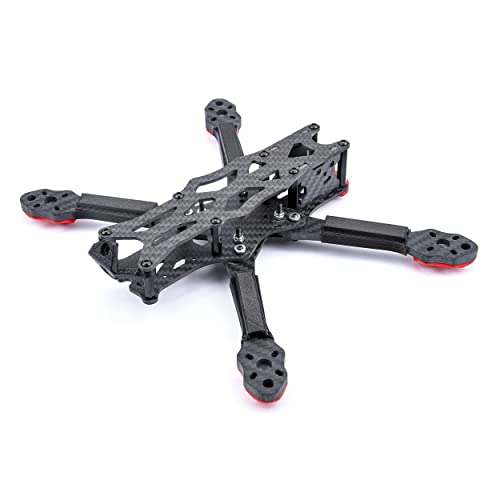
| Best for Racing | Material Composition: 3K carbon fiber | Frame Size/Wheelbase: 5 inch (225mm) | Arm Thickness: Not specified | VIEW LATEST PRICE | Read Our Analysis |
| Mark4 HD 5-Inch FPV Racing Drone Frame Kit |

| Most Durable Build | Material Composition: Full 3K carbon fiber | Frame Size/Wheelbase: 5 inch (225mm) | Arm Thickness: 5mm carbon fiber arms | VIEW LATEST PRICE | Read Our Analysis |
| 295mm FPV Racing Drone Frame with Carbon Fiber |

| Best for Beginners | Material Composition: 3K carbon fiber | Frame Size/Wheelbase: 7 inch (295mm) | Arm Thickness: 5mm arm thickness | VIEW LATEST PRICE | Read Our Analysis |
| YoungRC 4inch FPV Drone Carbon Fiber Frame Kit |
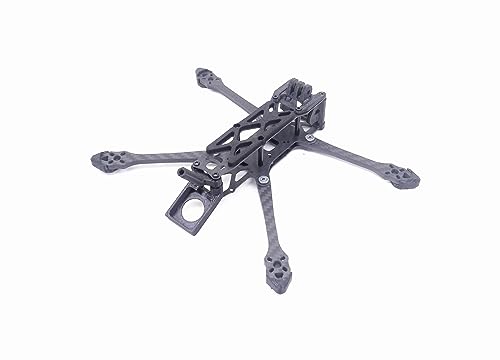
| Most Compact Design | Material Composition: High-quality 3K carbon fiber | Frame Size/Wheelbase: 4 inch (185mm) | Arm Thickness: 4mm thickness arms | VIEW LATEST PRICE | Read Our Analysis |
| Readytosky 295mm HD FPV Racing Drone Frame Kit |

| Best Freestyle Performance | Material Composition: Pure carbon fiber | Frame Size/Wheelbase: 7 inch (295mm) | Arm Thickness: 5mm frame arms | VIEW LATEST PRICE | Read Our Analysis |
| TAROT FY690S 6 Axle Carbon Fiber Hexacopter Frame |
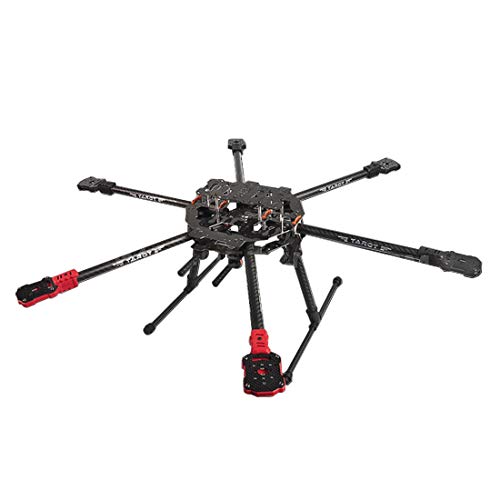
| Professional-Grade Powerhouse | Material Composition: 3K carbon fiber | Frame Size/Wheelbase: 6-axis (690mm) | Arm Thickness: Carbon fiber hollow tubes | VIEW LATEST PRICE | Read Our Analysis |
| HGLRC Drashark16 75mm FPV Frame for FPV Racing Drone Quadcopters |

| Ultralight Pick | Material Composition: Carbon fiber | Frame Size/Wheelbase: 75mm | Arm Thickness: Not specified | VIEW LATEST PRICE | Read Our Analysis |
More Details on Our Top Picks
YoungRC HD5 5inch FPV Racing Drone Frame Kit
If you’re serious about FPV racing and freestyle flying, the YoungRC HD5 delivers the durability and performance you need. This 225mm frame weighs just 147 grams and features premium 3K carbon fiber construction, giving you a lightweight platform that won’t sacrifice sturdiness. The HD5’s thoughtful 3D-printed design guarantees high quality and longevity, making it ideal for both competitive racing and creative freestyle maneuvers. You’ll appreciate its compatibility with 1080p HD video capture systems for capturing your flights. Keep in mind that you’ll need to source your own batteries and radio control equipment separately. With its proven frame geometry and robust build quality, the YoungRC HD5 is an excellent choice for pilots seeking reliability and performance.
- Material Composition:3K carbon fiber
- Frame Size/Wheelbase:5 inch (225mm)
- Arm Thickness:Not specified
- Intended Use/Frame Type:HD FPV Freestyle RC Racing
- Weight:147g
- Skill Level:All skill levels
- Additional Feature:1080p video capture resolution
- Additional Feature:30-day Amazon return policy
- Additional Feature:Radio control connectivity
Mark4 HD 5-Inch FPV Racing Drone Frame Kit
The Mark4 HD 5-Inch FPV Racing Drone Frame Kit stands out for FPV racers who demand both high performance and DJI integration. You’ll appreciate its 5mm carbon fiber arms that deliver exceptional rigidity without excess weight. The H-shaped design gives you shorter arms, creating more internal space and lowering your center of gravity for improved handling. Built from full 3K carbon fiber, this frame safeguards against crashes better than standard alternatives. Its 225mm wheelbase offers the perfect balance between agility and stability. You can mount either 30.5×30.5mm or 20x20mm flight controllers, providing flexibility in component selection. Perfect compatibility with DJI Air Unit HD FPV systems guarantees you’re future-proofed for premium racing performance.
- Material Composition:Full 3K carbon fiber
- Frame Size/Wheelbase:5 inch (225mm)
- Arm Thickness:5mm carbon fiber arms
- Intended Use/Frame Type:FPV Racing
- Weight:Not specified
- Skill Level:All skill levels
- Additional Feature:DJI Air Unit compatible
- Additional Feature:Dual flight controller support
- Additional Feature:Lower center of gravity
295mm FPV Racing Drone Frame with Carbon Fiber
You’ll find that carbon fiber drone frames excel when you’re seeking the perfect balance between durability and performance, whether you’re just starting your FPV journey or you’re a seasoned pilot. The 295mm frame delivers exactly this with its 3K carbon fiber construction and robust 5mm arms. You’ll appreciate how lightweight design doesn’t compromise strength, enabling flexible, stable flight characteristics. The 7-inch freestyle configuration suits both beginners and advanced pilots, offering responsive handling and reliable performance. Its long-range capabilities give you extended flight possibilities, while straightforward assembly means you’re airborne faster. You’re getting professional-grade materials and thoughtful engineering that translates directly into confident, enjoyable flying experiences.
- Material Composition:3K carbon fiber
- Frame Size/Wheelbase:7 inch (295mm)
- Arm Thickness:5mm arm thickness
- Intended Use/Frame Type:FPV Freestyle
- Weight:Not specified
- Skill Level:Beginners to advanced
- Additional Feature:Long-range flight capability
- Additional Feature:Beginner to advanced suitable
- Additional Feature:Easy to assemble
YoungRC 4inch FPV Drone Carbon Fiber Frame Kit
Beginners and experienced pilots alike’ll find the YoungRC Ran4 frame kit strikes an ideal balance between durability and ease of use, making it an excellent entry point into FPV racing without compromising performance. You’ll appreciate the 3K carbon fiber construction, which keeps the 185mm frame lightweight while maintaining rigidity. The 4mm thickness arms fold intelligently and absorb impact energy during collisions. Assembly’s straightforward, and you’ll get everything needed: battery, blades, camera, and screws. At just 80 grams, it’s portable for outdoor and indoor flying. The 1100mAh battery delivers reliable flight time, while the CMOS camera captures crisp MOV videos. Wi-Fi connectivity keeps you connected throughout your flights.
- Material Composition:High-quality 3K carbon fiber
- Frame Size/Wheelbase:4 inch (185mm)
- Arm Thickness:4mm thickness arms
- Intended Use/Frame Type:Mini FPV Drone Quadcopter
- Weight:80g
- Skill Level:Beginners to experienced
- Additional Feature:Folding arms with locking
- Additional Feature:Included battery and camera
- Additional Feature:5.8GHz connectivity
Readytosky 295mm HD FPV Racing Drone Frame Kit
Racers and freestyle pilots who demand durability without sacrificing agility will appreciate what Readytosky’s 295mm HD frame delivers. This pure carbon fiber construction weighs remarkably little while maintaining impressive sturdiness through 5mm frame arms. You’ll find the 7-inch freestyle frame strikes an excellent balance between minimizing air resistance and providing ample mounting space for components. Built specifically for the DJI FPV Air Unit, this frame comes together easily during assembly. The robust design suits both competitive racing and creative freestyle flying, making it a versatile choice for pilots seeking reliable performance without compromise.
- Material Composition:Pure carbon fiber
- Frame Size/Wheelbase:7 inch (295mm)
- Arm Thickness:5mm frame arms
- Intended Use/Frame Type:FPV Racing/Freestyle
- Weight:Lightweight
- Skill Level:Racers and freestyle pilots
- Additional Feature:DJI FPV system compatible
- Additional Feature:Sturdy 5mm frame arms
- Additional Feature:Easy to build
TAROT FY690S 6 Axle Carbon Fiber Hexacopter Frame
The TAROT FY690S makes an excellent choice for operators who need a robust platform capable of handling professional-grade payloads, since its 690mm frame combines structural integrity with lightweight construction. You’ll appreciate the full 3K carbon fiber composition, which includes hollow tubes that reduce weight without compromising durability. At just 600 grams, this hexacopter frame delivers impressive payload capacity for aerial photography and surveying missions. The CNC-machined components guarantee precision engineering throughout. You’ll benefit from the folding design, which simplifies transport and storage. The pure carbon pipe construction provides exceptional rigidity, allowing you to achieve stable flight characteristics even under demanding conditions.
- Material Composition:3K carbon fiber
- Frame Size/Wheelbase:6-axis (690mm)
- Arm Thickness:Carbon fiber hollow tubes
- Intended Use/Frame Type:Hexacopter
- Weight:600g
- Skill Level:All skill levels
- Additional Feature:Six-axis hexacopter design
- Additional Feature:CNC machined components
- Additional Feature:Full folding capability
HGLRC Drashark16 75mm FPV Frame for FPV Racing Drone Quadcopters
If you’re building a competitive FPV racing drone that won’t sacrifice durability for speed, the HGLRC Drashark16 75mm frame delivers the lightweight construction you need. Weighing just 5.3 grams, this carbon fiber frame combines compact dimensions with impressive rigidity. The 75mm wheelbase fits perfectly in tight racing circuits, while standardized 25.5×25.5mm flight control mounting holes guarantee seamless integration with the SPECTER 10A AIO flight controller. You’ll appreciate the precision motor mounting holes and full compatibility with SPECTER 1002-21000KV motors. With 1080p video capture capability and RF connectivity, you’re equipped for serious competition. Customers rate it 4.3 out of 5 stars, confirming its reliability among FPV enthusiasts.
- Material Composition:Carbon fiber
- Frame Size/Wheelbase:75mm
- Arm Thickness:Not specified
- Intended Use/Frame Type:FPV Racing Quadcopter
- Weight:5.3g
- Skill Level:All skill levels
- Additional Feature:Ultra-lightweight 5.3g design
- Additional Feature:1080p video resolution
- Additional Feature:Motor mounting precision holes
Factors to Consider When Choosing a Carbon Fiber Frame for a Drone
When you’re selecting a carbon fiber frame, you’ll want to evaluate the frame size and wheelbase that’ll match your flying style and the spaces you’re traversing. You should scrutinize the material quality standards, arm thickness, and weight specifications since these factors directly impact durability and performance during flights. Finally, you’ll need to verify that your chosen frame’s design accommodates your motors, ESCs, flight controllers, and other components without requiring costly modifications.
Frame Size and Wheelbase
How do you choose the right frame dimensions for your flying style? Frame size and wheelbase directly affect your drone’s performance characteristics. Smaller frames with shorter wheelbases give you superior agility and responsiveness, making them ideal for racing. Larger frames with longer wheelbases provide enhanced stability and control, benefiting aerial photography work. You’ll need to balance maneuverability against steadiness based on your intended use. Consider that heavier frames reduce flight time and payload capacity, so don’t overlook weight when selecting dimensions. Freestyle pilots often prefer mid-range sizes for versatility. Ultimately, your flying style should dictate your frame choice—match your dimensions to your specific needs for best performance.
Material Quality Standards
Now that you’ve selected your frame size and wheelbase, you’ll want to make certain you’re purchasing a frame built with genuine quality materials. Look for manufacturers using aerospace-grade carbon fiber with 3K or 12K weaves and reinforced joints. You should verify that raw materials meet certification standards for tensile strength, Young’s modulus, and density. Reputable producers employ ASTM or ISO testing procedures to measure impact resistance and vibration dampening capabilities. Consistent manufacturing processes and rigorous quality control checks guarantee minimal defects and tight dimensional tolerances. These standards directly impact your drone’s performance, reliability, and longevity. Don’t settle for frames lacking documented material certifications or standardized testing results—they’re non-negotiable indicators of legitimate quality.
Weight and Performance
Since you’ve verified your frame’s material quality, understanding how weight impacts performance becomes your next critical consideration. Carbon fiber’s exceptional strength-to-weight ratio directly influences your drone’s speed and maneuverability, allowing quicker acceleration and sharper turns.
You’ll want to balance frame weight carefully against structural integrity. Thicker carbon fiber arms provide rigidity that withstands crashes and impacts, protecting your investment during inevitable mishaps. However, excessive thickness adds weight that compromises agility.
A lower center of gravity from thoughtful frame design enhances stability and control during flight operations. You achieve ideal performance by finding the sweet spot between lightweight construction and durability. This balance determines whether your drone flies smoothly through complex maneuvers or struggles with sluggish response times.
Arm Thickness and Durability
Finding that performance sweet spot requires you to examine one of the most impactful design elements: your frame’s arm thickness. Thicker arms—typically 5mm—deliver superior rigidity and durability, absorbing impact forces that’d otherwise damage thinner designs. However, you’ll sacrifice some weight advantage.
Thinner arms like 3-4mm keep your drone lightweight and responsive, but they’re more prone to cracking and demand frequent repairs. Your intended use determines the suitable thickness. If you’re flying freestyle or racing, you’ll want thicker arms for the stability and strength they provide. Meanwhile, material grade matters equally—3K or 12K carbon fiber offers better strength-to-weight ratios than lower grades, ultimately enhancing frame longevity. Balance weight against durability carefully for ideal performance.
Compatibility With Components
Once you’ve selected an arm thickness and material grade, you’ll need to verify that your carbon fiber frame accommodates your drone’s electronic components. Check the frame’s motor mount compatibility—you’ll want to confirm your ESCs, motors, and propellers fit properly without modifications. Verify mounting holes align with your flight controller and power distribution board. Ensure cable routing channels won’t create bottlenecks during assembly. Examine battery compartment dimensions to ascertain your LiPo pack fits securely. Review weight specifications to guarantee your frame’s payload capacity supports all electronics without exceeding your drone’s design parameters. Mismatched components can compromise flight performance, stability, and safety. Cross-reference manufacturer specifications before purchasing to avoid costly incompatibilities.
Flight Controller Mounting Options
Your flight controller‘s stability depends directly on how well your frame accommodates it. You’ll typically encounter 30.5×30.5mm and 20x20mm mounting patterns on quality carbon fiber frames. These standardized options guarantee you can securely attach your flight controller without compatibility issues.
When selecting a frame, you should verify that the mounting pattern matches your controller’s footprint. Some frames go further by offering reinforced mounting areas or multiple attachment points, which enhance overall stability during flight.
Don’t overlook your controller’s size and weight when making your choice. A heavier controller requires a frame designed to handle that load without compromising performance. Proper alignment is equally critical—misaligned controllers degrade handling and responsiveness. Taking time to match these specifications ensures your drone flies predictably and performs at its best.
Use Case and Application
How you intend to fly your drone fundamentally shapes which carbon fiber frame you’ll need. Racing drones demand lightweight, rigid frames that prioritize speed and agility, while photography builds require stability and payload capacity. If you’re flying indoors, you’ll want compact frames with protective guards. Outdoor mapping missions call for larger frames supporting heavier cameras and extended flight times.
Your skill level matters too. Beginners benefit from forgiving frames with wider wheelbases, while experienced pilots can handle twitchy, high-performance designs. Consider your environment—windy conditions require sturdier construction, whereas calm settings allow for minimalist builds.
Budget constraints also factor in. Entry-level frames cost less but offer fewer customization options, while professional-grade frames provide superior durability and modularity for specialized applications.
Assembly Difficulty and Maintenance
Assembly complexity varies considerably across carbon fiber frames, and selecting one that matches your technical comfort level’ll save you frustration during setup and repairs. Beginner-friendly models feature modular designs and clear instructions, reducing assembly time and simplifying future modifications. Advanced frames demand specialized tools and technical expertise, potentially complicating maintenance.
Regardless of complexity level, you’ll need to prioritize regular inspections for cracks and damage to guarantee structural integrity. Carbon fiber’s durability and crash resistance minimize maintenance frequency, but proper handling remains essential for maximizing lifespan. Consider your skills honestly—choosing an appropriately matched frame ascertains you’ll perform necessary upkeep confidently and keep your drone operating safely throughout its lifecycle.