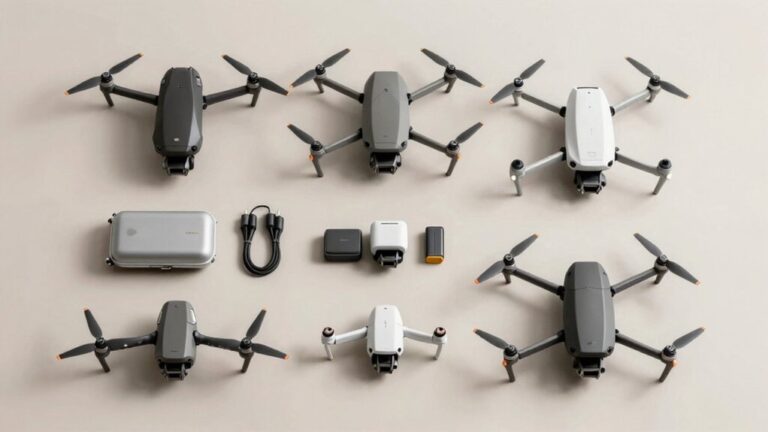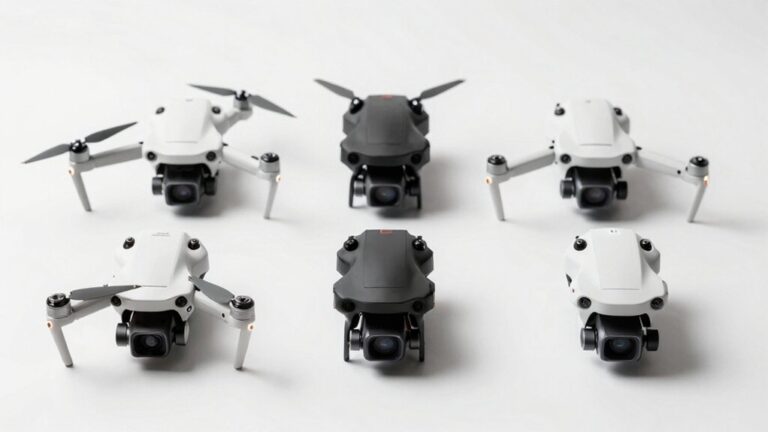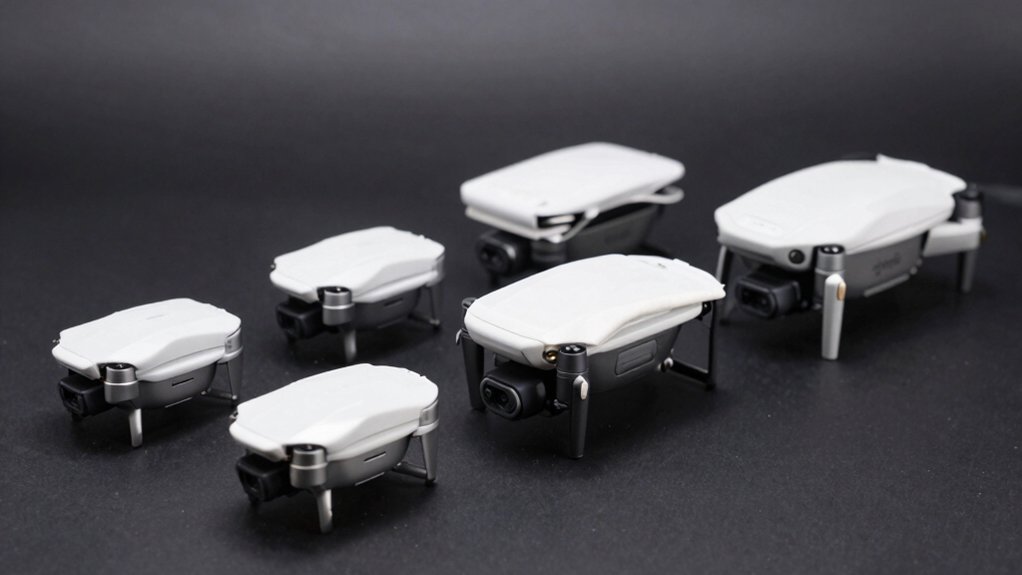
You’re piloting a drone over sensitive terrain or crowded areas, and system failure isn’t an option. Parachute systems transform your UAV into a safer investment by ensuring controlled descents during emergencies. But which solution matches your specific drone model and safety requirements? We’ve identified the top parachute systems that’ll protect your aircraft—and what’s below it.
Quick Overview
- DJI Mavic 3 and Air 3 drones offer optimal parachute compatibility with lightweight systems achieving 0.5-second deployment times.
- Parachute systems meeting ASTM F3322-22 standards ensure reliable emergency descent at safe 5 m/s landing speeds.
- Dual-sensor technology combining attitude sensors and barometers provides high-accuracy autonomous detection and rapid response capabilities.
- Expect 15-25 minutes of flight time when parachute systems are installed due to increased weight burden.
- Reusable base systems with disposable parachute components reduce long-term replacement costs while maintaining safety performance.
| Manti 4 UAV Flight Safety Guard Drone Parachute |

| Most Compatible | Product Type: UAV parachute safety system | Deployment Speed: 0.5 seconds | Parachute Size: 1.1 square meters | VIEW LATEST PRICE | Read Our Analysis |
| Manti 3 Plus Drone Parachute Safety Guard |

| Best Overall | Product Type: UAV parachute safety system | Deployment Speed: 0.5 seconds | Parachute Size: 1.1 square meters | VIEW LATEST PRICE | Read Our Analysis |
| ParaZero SafeAir Drone Parachute System for DJI Mavic 3 |

| Industry-Leading Certified | Product Type: Drone parachute system | Deployment Speed: 0.5 seconds | Parachute Size: Not specified | VIEW LATEST PRICE | Read Our Analysis |
| Drone Parachute for DJI Mavic 3 & Air 3 |

| Lightest Weight | Product Type: Drone parachute system | Deployment Speed: 0.5 seconds | Parachute Size: Not specified | VIEW LATEST PRICE | Read Our Analysis |
| Universal Drone Airdrop System with Payload Release Device |

| Maximum Payload Range | Product Type: Airdrop/payload release device | Deployment Speed: Fast response speed | Parachute Size: N/A | VIEW LATEST PRICE | Read Our Analysis |
| Holy Stone Mini Drone for Kids (HS210) |
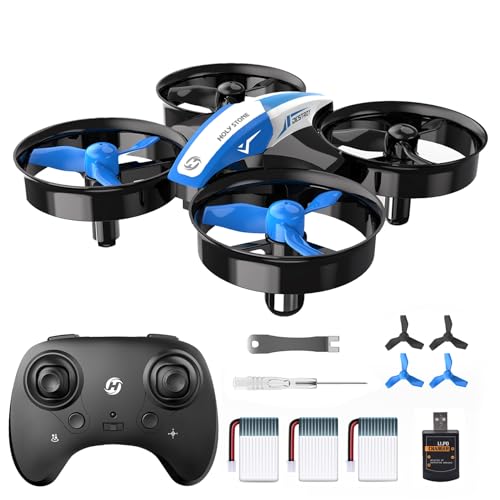
| Best For Kids | Product Type: Mini drone for kids | Deployment Speed: N/A | Parachute Size: N/A | VIEW LATEST PRICE | Read Our Analysis |
| Drone Airdrop System Payload Release Device |

| Most Versatile | Product Type: Payload release device | Deployment Speed: One-button operation | Parachute Size: N/A | VIEW LATEST PRICE | Read Our Analysis |
More Details on Our Top Picks
Manti 4 UAV Flight Safety Guard Drone Parachute
Want a parachute system that’ll deploy in half a second when disaster strikes? The Manti 4 UAV Flight Safety Guard does exactly that. This system features a 1.1-square-meter parachute that slows your drone’s descent to just 5 m/s, drastically reducing crash damage and injury risks. It’s compatible with popular DJI models including the Mavic 3 series and Air 3. Official testing demonstrated a 100% deployment success rate from 25 meters altitude. The universal base is reusable, though parachute components need replacement after each use. Firmware updates continuously enhance the system’s algorithms and detection capabilities, ensuring reliable protection during emergencies.
- Product Type:UAV parachute safety system
- Deployment Speed:0.5 seconds
- Parachute Size:1.1 square meters
- Battery Life:Not specified
- Installation Method:Not specified
- Weight/Portability:Compact design
- Additional Feature:100% parachute opening success rate
- Additional Feature:Universal and reusable base
- Additional Feature:Compatible with 11+ drone models
Manti 3 Plus Drone Parachute Safety Guard
If you’re operating multiple DJI drone models—whether you’re flying a Mavic 3 Pro, Air 3, or older Mavic Pro—the Manti 3 Plus offers robust protection across your entire fleet. This safety system deploys within 0.5 seconds, bringing your drone down at a controlled 5 m/s landing speed that dramatically reduces crash damage. The reusable base and disposable parachute parts mean you’ll only replace what’s needed after each flight. You’ll get approximately 30 minutes of operation across six flights per charge, and the device supports firmware updates that continuously improve performance and expand drone compatibility.
- Product Type:UAV parachute safety system
- Deployment Speed:0.5 seconds
- Parachute Size:1.1 square meters
- Battery Life:30 minutes x 6 flights per charge
- Installation Method:Not specified
- Weight/Portability:Not specified
- Additional Feature:Future adaptable to new models
- Additional Feature:Firmware algorithm parameter fine-tuning
- Additional Feature:30 minutes x 6 flights
ParaZero SafeAir Drone Parachute System for DJI Mavic 3
The ParaZero SafeAir Drone Parachute System for DJI Mavic 3 is your best choice if you’re operating in environments where drone failures pose significant risks to people or property below. This lightweight 185g system deploys within 0.5 seconds during critical failures, meeting rigorous ASTM F3322-22 standards. You’ll appreciate the quick 3-5 minute installation and autonomous safety monitoring that analyzes flight data in real-time. The integrated 4-hour battery, audio buzzer, and black box data logging provide thorough protection. Designed for low-altitude operations, it’s compatible with DJI Mavic 3 series and delivers effective deployment across stationary, high-speed, and power-loss scenarios.
- Product Type:Drone parachute system
- Deployment Speed:0.5 seconds
- Parachute Size:Not specified
- Battery Life:4-hour independent battery
- Installation Method:Quick plug-and-play (3-5 minutes)
- Weight/Portability:185g (lightweight)
- Additional Feature:ASTM F3322-22 certified compliance
- Additional Feature:4-hour independent battery power
- Additional Feature:Black box data logging
Drone Parachute for DJI Mavic 3 & Air 3
Owners of DJI’s premium Mavic 3 and Air 3 models will find this parachute system particularly valuable for protecting their investment during unexpected flight failures. You’ll appreciate the dual-sensor technology that continuously monitors your drone’s status through an omnidirectional attitude sensor and high-precision barometer. When danger strikes, the system deploys in just 0.5 seconds using advanced dual-chip processing and Flyfire APS risk assessment algorithms. The lightweight 89.2g design barely impacts battery life, lasting through six flights on a single charge. You’ll only need to replace the parachute itself after deployment—the core base is reusable. Plus, online firmware updates keep your system compatible with future drone models.
- Product Type:Drone parachute system
- Deployment Speed:0.5 seconds
- Parachute Size:Not specified
- Battery Life:30 minutes x 6 flights per charge
- Installation Method:Not specified
- Weight/Portability:89.2g (lightweight)
- Additional Feature:Dual-chip Flyfire APS algorithm
- Additional Feature:Low propeller twisting probability
- Additional Feature:24-hour Amazon customer support
Universal Drone Airdrop System with Payload Release Device
You’ll find this system invaluable if you’re conducting deliveries or scientific operations that demand precision beyond 1km. The motor-driven payload release device features adjustable hook positioning via a simple black button press, giving you superior control over your airdrop items. Installation’s straightforward—Velcro binding secures it firmly to your drone’s belly without loosening. The rechargeable system responds quickly and delivers stable, reliable operation. Included accessories like the sling and small hoop expand your versatility, while pairing it with landing gear enhances stability. With remote control signal range within 1km, you’ll manage operations seamlessly.
- Product Type:Airdrop/payload release device
- Deployment Speed:Fast response speed
- Parachute Size:N/A
- Battery Life:Rechargeable
- Installation Method:Velcro binding on drone belly
- Weight/Portability:Not specified
- Additional Feature:Exceeds 1km effective distance
- Additional Feature:Adjustable hook position control
- Additional Feature:Velcro binding installation method
Holy Stone Mini Drone for Kids (HS210)
Holy Stone’s HS210 stands out as an ideal choice for young pilots who’re just beginning their drone journey. You’ll appreciate its user-friendly features like Toss to Launch and Circle Fly, which make flying intuitive and fun. The adjustable speed settings let you match the drone’s performance to your skill level, while Altitude Hold keeps it stable during hovering. You get three batteries included, providing up to 21 minutes of total flight time with low battery alerts. The propeller guards protect both your new drone and bystanders. Its mini size makes it perfect for parties, schools, and outdoor adventures. Headless Mode eliminates confusion about orientation, ensuring carefree flights every time.
- Product Type:Mini drone for kids
- Deployment Speed:N/A
- Parachute Size:N/A
- Battery Life:Up to 21 minutes (3 batteries included)
- Installation Method:Remote control pairing
- Weight/Portability:Mini and portable
- Additional Feature:Toss to launch capability
- Additional Feature:3D flips and auto rotation
- Additional Feature:Propeller protection guard included
Drone Airdrop System Payload Release Device
Why settle for basic delivery when you can deploy payloads with precision? The Drone Airdrop System Payload Release Device transforms your drone into a sophisticated delivery platform. You’ll appreciate its impressive 750g maximum load capacity and one-button operation via a 150m-range 2.4G remote controller. The 350mAh battery provides 12-hour standby time with just 1.5-hour charging. You can execute up to 600 on/off cycles per charge. With Velcro installation and adjustable 30cm straps, you’ll mount it effortlessly on DJI Mini 5 Pro, Air 3, Mavic 4 Pro, Phantom models, and countless other drones exceeding 100g weight. Whether you’re dropping wedding rings, flowers, rescue supplies, or creating memorable surprises, this versatile device delivers reliable performance.
- Product Type:Payload release device
- Deployment Speed:One-button operation
- Parachute Size:N/A
- Battery Life:12-hour standby; 1.5-hour charging time
- Installation Method:Velcro installation with adjustable strap
- Weight/Portability:Maximum 750g load capacity
- Additional Feature:750g maximum load capacity
- Additional Feature:600 turn on/off cycles
- Additional Feature:150m remote controller range
Factors to Consider When Choosing a Drone With Parachute
You’ll want to verify that any parachute system you’re considering is compatible with your drone model before making a purchase. Your choice should balance deployment speed, weight capacity, and battery life to ascertain your aircraft can safely carry the parachute without compromising flight performance. Finally, confirm that the landing safety standards and sensor technology quality meet your specific operational needs and regulatory requirements.
Drone Model Compatibility
Not all parachute systems fit every drone, so compatibility is essential when making your selection. You’ll need to verify that the parachute system’s weight won’t exceed your drone’s payload capacity, as excess weight compromises flight performance and battery life.
Check the mounting mechanism—your drone must have suitable attachment points for secure installation. Review the manufacturer’s compatibility list to confirm your specific model is supported. Consider the parachute system’s deployment speed and altitude requirements, ensuring they align with your drone’s capabilities.
You should also examine whether the system requires firmware updates or additional sensors for your aircraft. Verify that the parachute’s size appropriately matches your drone’s weight and dimensions for effective descent control.
Parachute Deployment Speed
Once you’ve confirmed your drone’s compatibility with a parachute system, deployment speed becomes your next critical consideration. You’ll want a system that activates within 0.5 seconds to minimize damage and injury during crashes.
Look for drones equipped with real-time flight data analysis that quickly identifies problems and triggers parachute activation. Advanced algorithms and multiple sensors enable precise risk assessment, guaranteeing reliable deployment when you need it most.
Redundant safety features—like backup altimeters and accelerometers—provide extra protection and faster response times. These backups ensure deployment even if primary systems fail.
This redundancy matters especially during low-altitude flights where you have minimal time for the parachute to fully deploy before impact. Prioritizing rapid deployment speed directly protects your investment and guarantees safer operations.
Weight and Battery Life
Adding a parachute system to your drone inherently increases weight, which directly impacts flight time and performance. You’ll need to balance the safety benefits against reduced battery capacity. Heavier drones consume more energy, shortening your operational window considerably. When selecting a model, compare the combined weight of the drone and parachute system to its battery capacity rating. Look for drones specifically engineered to accommodate parachute systems, as manufacturers optimize these models for weight distribution and power management. You should expect 15-25 minutes of flight time with a parachute installed, depending on the model and conditions. Prioritize drones with larger battery options or quick-swap capabilities, allowing you to extend your flying sessions without compromising safety features.
Landing Safety Standards
When you’re evaluating drones with parachute systems, landing safety standards should be a primary consideration. You’ll want to verify that your drone complies with ASTM F3322-22, which establishes critical benchmarks for parachute deployment reliability and landing speeds under 5 m/s. These standards guarantee effective failure detection and safe descents across various scenarios.
You should also confirm that manufacturers conduct thorough testing simulating accidents from multiple altitudes and speeds. This validation proves the system performs reliably when you need it most. Additionally, you’ll benefit from autonomous systems that analyze flight data in real-time and respond within 0.5 seconds, minimizing risks during emergencies.
Finally, ensure your drone meets aviation regulations in your region and that manufacturers collaborate with relevant authorities for legal integration.
Sensor Technology Quality
Two critical factors define superior sensor technology in parachute-equipped drones: detection accuracy and response speed. You’ll want dual-sensor systems that combine attitude sensors and barometers to monitor all-inclusive real-time flight data. This redundancy guarantees you’re catching potential emergencies before they escalate.
The algorithms processing your sensor data are equally important. You need sophisticated software that swiftly analyzes incoming information and predicts when parachute activation’s necessary. Advanced algorithms dramatically reduce response times, meaning your drone deploys its parachute milliseconds after detecting a problem.
When evaluating drones, scrutinize the sensor specifications and algorithmic capabilities. Ask manufacturers about detection accuracy rates and response latency times. Superior sensor technology directly translates to reliable emergency response, ultimately protecting your investment and ensuring safe landings consistently.
Replacement Part Costs
While reliable sensors and swift algorithms protect your drone during emergencies, you’ll also need to ponder the ongoing costs of maintaining that safety system. Replacement parachutes range from $10 to $100 or more, depending on quality and specifications. Your replacement frequency hinges on crash severity and deployment frequency—frequent flyers face steeper expenses than casual users.
To minimize costs, consider systems with reusable parachute bases that require replacing only disposable components. Subscription-based replacement services offer predictable long-term budgeting, eliminating surprise expenses. Additionally, firmware updates can extend your system’s lifespan by enabling compatibility with newer drone models, reducing the need for complete system replacements.
Evaluate these factors against your flying habits and budget to determine the most economical option for your needs.